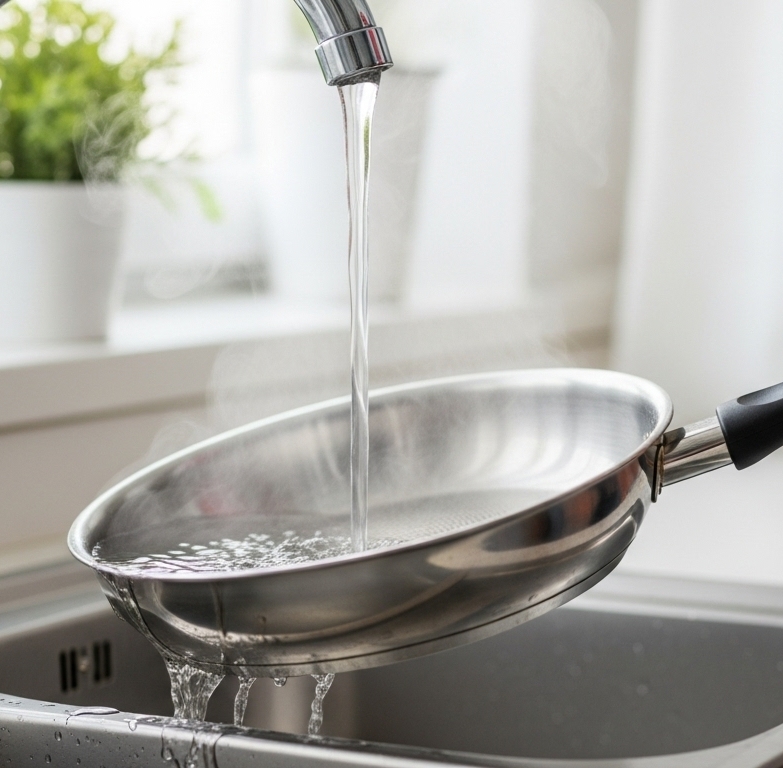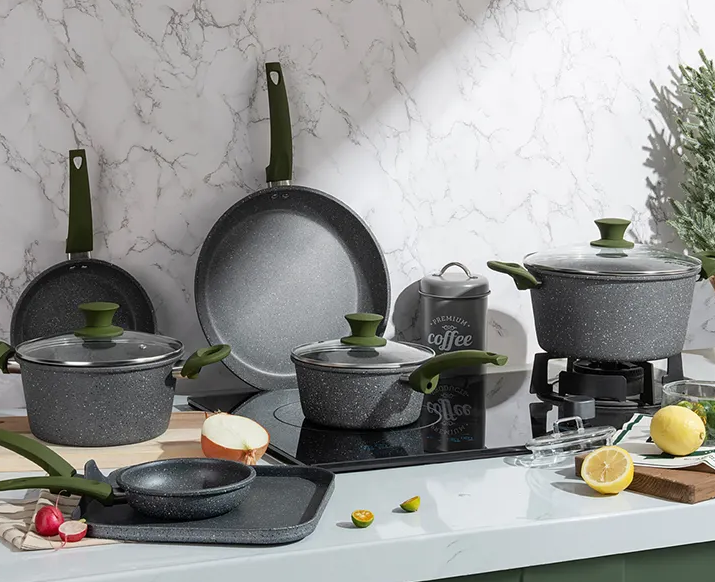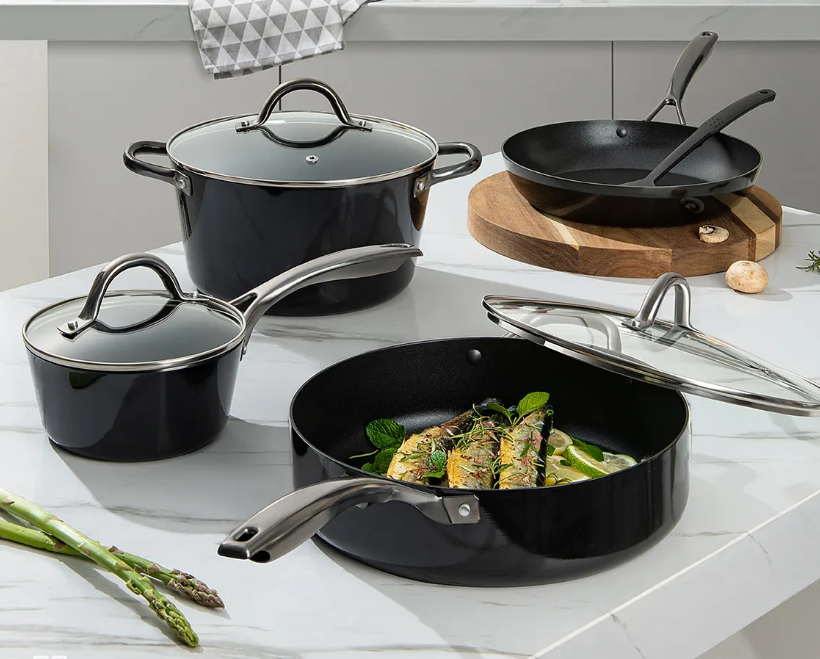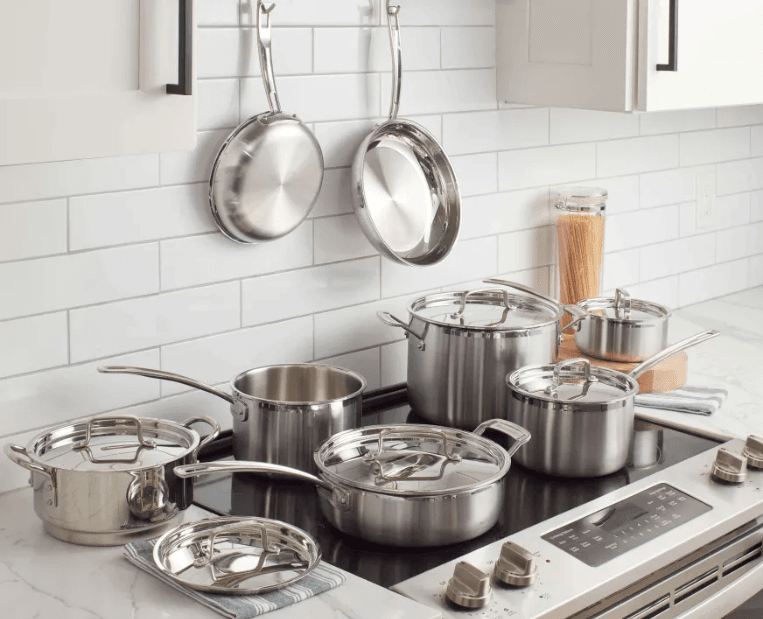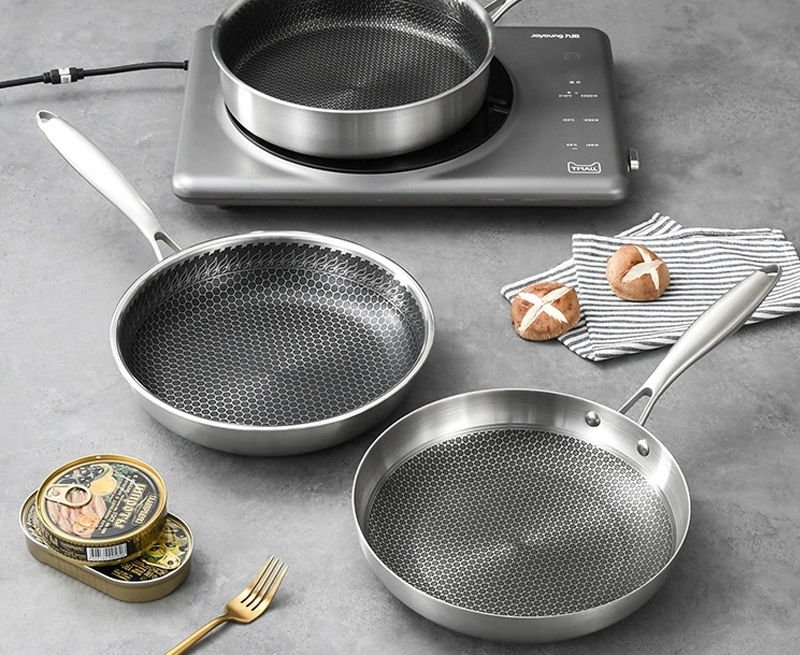
When selecting cookware, the material is a crucial factor to consider, as it influences the cooking process, heat distribution,and overall performance. Different materials offer unique benefits and are suited for various cooking techniques.
(1)Stainless steel
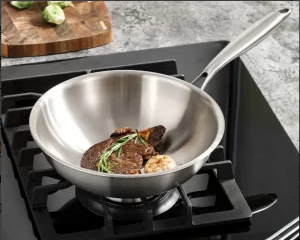
stainless steel is a popular choice for cookware due to its durability, non-reactive nature, and sleek appearance. it’s excellenfor browning, searing, and deglazing, making it ideal for dishes that require a lot of stirring and whisking. stainless steel pansoften have an aluminum or copper core to enhance heat distribution, ensuring even cooking. They are also resistant to rustand corrosion, making them long-lasting.
Best Uses: Searing meats, making sauces, and cooking acidic foods
(2)Cast lron
Cast iron is renowned for its excellent heat retention and even heat distribution. it’s perfect for slow cooking, frying, andbaking, as it maintains a consistent temperature. Cast iron cookware can be used on the stovetop, in the oven, and even on agrll. while traditional cast iron requires seasoning to maintain its non-stick properties, enameled cast iron offers a smooth,easy-to-clean surface without the need for seasoning.
Best Uses: Slow cooking, frying, baking, and grilling.
(3)Non-stick
Non-stick cookware is favored for its ease of use and minimal oilrequirement. it’s ideal for cooking delicate foods like eggspancakes, and fish, which can easly stick to other surfaces. The non-stick coating allows for easy food release and quickcleaning. However, non-stick pans should not be used over high heat, as this can damage the coating. it’s alsorecommended to use wooden or silicone utensils to avoid scratching the surfaceBest Uses: Cooking eggs, pancakes, fish, and other delicate foods
(4)Aluminum
Aluminum is a ichtweicht, affordable, and hiohly conductive material, making it a common choice for cookware. it heats upquickly and evenly, which is ideal for sautéing, frying, and simmering. However, plain aluminum is reactive with acidic foodswhich can alter the taste and appearance of dishes. To counter this, aluminum cookware is often anodized or coated with anon-stick surface, providing a non-reactive and durable finish.Best Uses: Sautéing, frying, and simmering.
(5)copper
Copper cookware is prized for its superior heat conductivity, allowing for precise temperature control. it heats up and coolsdown quickly, making it perfect for tasks that require careful heat management, such as melting chocolate or makingdelicate sauces. However, copper is reactive with certain foods and requires regular polishing to maintain its appearanceMany copper pots and pans are lined with stainless steel to prevent reactions with food.Best Uses: Making delicate sauces, melting chocolate, and tasks requiring precise heat control
(6)Ceramic
Ceramic cookware offers a non-stick surface without the use of synthetic coatings, making it a popular choice for thoseooking for a natural cooking surface. it’s suitable for low to medium-heat cooking and is often used for baking, roasting, andslow cooking. Ceramic is non-reactive and does not leach chemicals into food. However, it can be more fragile than othermaterials and may crack or chip if not handled carefully.
Best Uses: Baking, roasting, and slow cooking.